
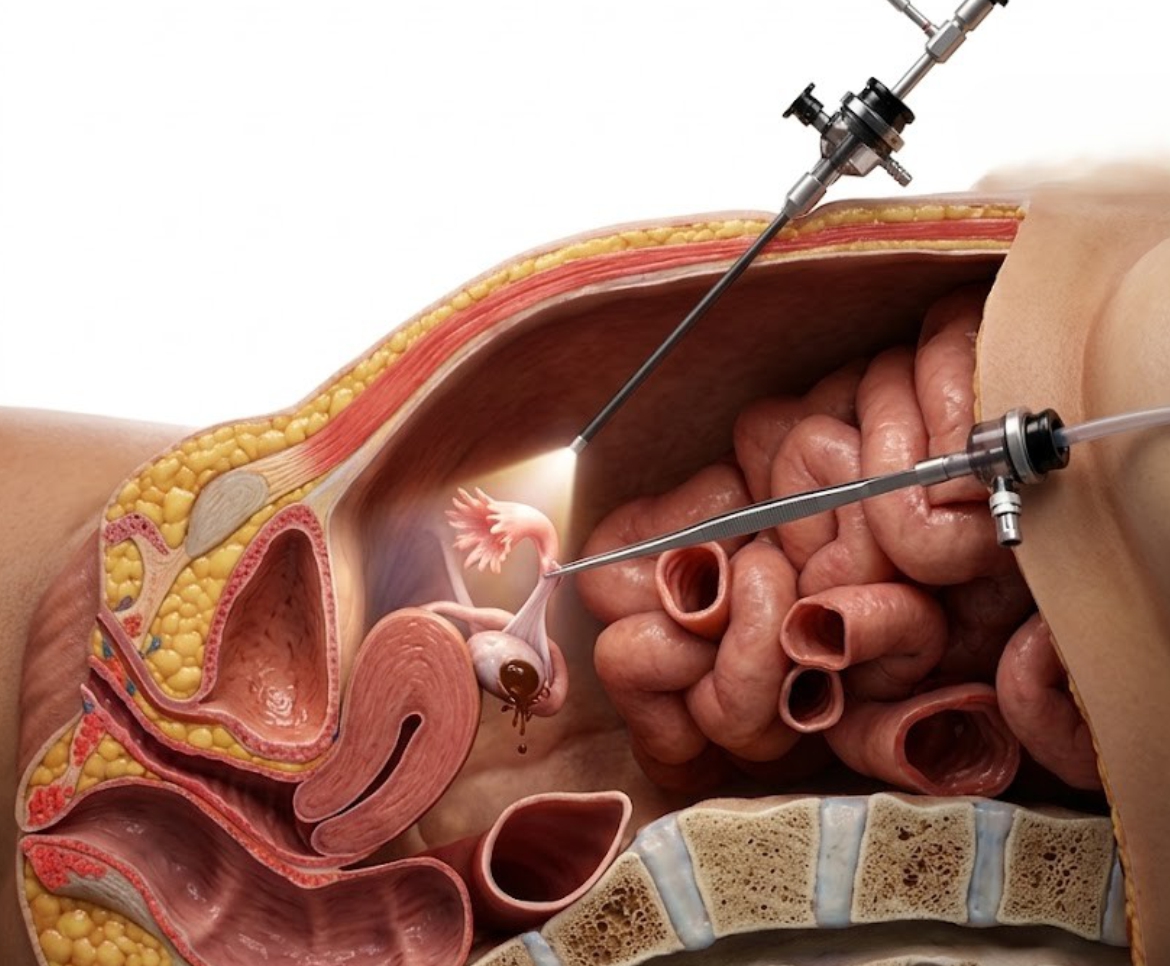
Infertility-Related Laparoscopy
Conditions That May Be Identified or Treated :
- Endometriosis
- Ovarian cysts
- Fibroids
- Pelvic adhesions
- Blocked or damaged fallopian tubes
- Other pelvic abnormalities
Common Symptoms or Concerns :
- Difficulty conceiving
- Recurrent pregnancy loss
- Pelvic or abdominal pain
- Irregular menstrual cycles
- History of endometriosis or pelvic surgery
When to Consult a Gynaecologist :
Frequently Asked Questions
Advanced 4K 3D Karl Storz Rubina imaging provides a highly detailed, magnified view of the surgical area, helping the surgeon perform precise, targeted surgery.
Yes. The combination of high-definition 3D imaging and precise surgical techniques can help minimise tissue damage and blood loss during appropriately selected procedures.
Yes. Advanced imaging and specialised laparoscopic instruments provide better visualisation and enhanced precision, which can be particularly valuable in complex cases involving fibroids, severe endometriosis and adhesions.
In suitable cases, advanced laparoscopic surgery can treat complex conditions while preserving the uterus and ovaries whenever medically possible, supporting the patient’s future fertility goals.
Laparoscopy uses small incisions and advanced visualisation to enable precise surgery with less tissue trauma, potentially less blood loss, smaller scars and faster recovery compared with open surgery, when clinically appropriate.